
Advertising’s New Battlefield Isn’t Impressions. It’s LLM Citations.
Brainlabs’ Andrew Littlewood on why brands are now fighting for LLM citations instead of search rankings, and what data-driven creative advertising looks like in 2026.

Brainlabs’ Andrew Littlewood on why brands are now fighting for LLM citations instead of search rankings, and what data-driven creative advertising looks like in 2026.

Birdzi CEO Shekar Raman on how AI-driven personalization, unified data, and trust-based loyalty are helping grocery retailers rebuild the corner-store relationship at scale.

Privacy attorney Donata Stroink-Skillrud of Termageddon on how everyday marketing tools create legal exposure, why placebo consent banners fail, and the first three steps to actual compliance.
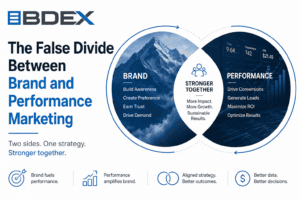
Kevin Wassong of mktg.ai on why brand and performance marketing were never meant to be separate disciplines, why creative drives up to 86% of marketing impact, and why attribution can’t be solved.
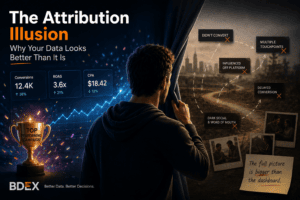
Cimin Ahmadi Cohen, founder of Idea Peddler, traces the attribution illusion back to collapsing match rates, junk audience data, and platforms with no financial incentive to clean up their own inventory.
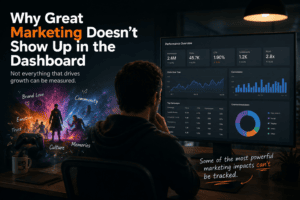
Old attribution models can’t see AI search, dark social, or LLM-driven research. Holly Enneking of Markup AI explains what to measure instead, and why human judgment still beats AI pattern-matching.

An auto industry marketing company leveraged BDEX Omni Pixel’s anonymous website visitor identification technology to significantly improve their client’s car sales and service appointments. By implementing Omni Pixel’s tracking pixel

Programmatic advertisers function in an internet environment today that is both massive in scale and highly volatile in terms of regulation and tech disruption. When advertisers deploy campaigns today, they

Programmatic advertisers perpetually strive to create personalized and engaging experiences for their target audience. But with seamlessly endless amounts of data available to advertisers, it can be overwhelming to make

Sports are a cultural centerpiece for Americans and people around the world. More than two-thirds of Americans report being fans of at least one sport. Additionally, Americans with higher income